The history of the role of Lord-Lieutenant
The post of Lord-Lieutenant is now an honorary appointment. The origin dates back to Henry VIII when its holder was made responsible for the maintenance of order and for the military measures necessary locally for defence.
By 1569 provision was made for the appointment of deputies. Although in 1871 the Regulation of the Forces Act removed the militia from the Lord-Lieutenant’s direct control, it was not until 1921 that the Lord-Lieutenant finally lost the power to call on all able-bodied men of the county to fight in the case of need.
The Lord-Lieutenants’ traditional links with the armed forces have been preserved in a modern form by their association with the Volunteer Reserve Forces. Lord-Lieutenants connections with uniformed organisations have led to links with other uniformed organisations, such as the police, fire and ambulance services and many voluntary bodies such as the Red Cross, the cadet forces and other national and local youth organisations.
In recent years Lord-Lieutenants have supported a wide range of matters, civil and defence, professional and voluntary and they can be effective largely because of their links to the Crown and also that their work is voluntary and not-political.
From the earliest days the Lord-Lieutenant has always been associated with the work of magistrates and until 1888 appointed the Clerk of the Peace.
Our current Lord-Lieutenant was a magistrate and now holds the ancient office of Custos Rotulorum, or Keeper of the Rolls for Essex, which is a largely ceremonial post but relates to keeping the records of the County’s magistrates. She is also chairman of the Lord Chancellor’s Advisory Committee on Justices of the Peace in Essex which makes recommendations to the Lord Chancellor about the appointment of magistrates.
Jump to our list of past Lord-Lieutenants of Essex >

The Lord-Lieutenant with Mayors and Chairmen at North Weald steam train.

HM Lord-Lieutenant Jennifer Tolhurst and HM High Sheriff of Essex Bryan Burrough with schoolchildren at Chelmsford Crown Court. The schoolchildren had been conducting and prosecuting mock trials.
Past Lord-Lieutenants of Essex
This is a list of those who have served as Lord-Lieutenant of Essex.
Since 1688, all the Lord-Lieutenants have also been Custos Rotulorum of Essex.
- John Petre, 1st Baron Petre
- John de Vere, 16th Earl of Oxford 1558–?
- Robert Dudley, 1st Earl of Leicester 3 July 1585 – 4 September 1588
- William Cecil, 1st Baron Burghley 31 December 1588 – 4 August 1598
- vacant
- Robert Radclyffe, 5th Earl of Sussex 26 August 1603 – 5 February 1629 jointly with
- Robert Rich, 2nd Earl of Warwick 8 September 1625 – 1642 jointly with
- Richard Weston, 1st Earl of Portland 5 February 1629 – 31 March 1635 and
- William Maynard, 1st Baron Maynard 6 August 1635 – 17 December 1640 and
- James Hay, 2nd Earl of Carlisle 8 January 1641 – 1642
- Interregnum
- Aubrey de Vere, 20th Earl of Oxford 13 August 1660 – 1687 jointly with
- Christopher Monck, 2nd Duke of Albemarle 30 November 1675 – 1687
- Thomas Petre, 6th Baron Petre 18 February 1688 – 1688
- Aubrey de Vere, 20th Earl of Oxford 25 October 1688 – 12 March 1703
- Francis North, 2nd Baron Guilford 23 March 1703 – 1705
- Richard Savage, 4th Earl Rivers 16 April 1705 – 18 August 1712
- Henry St John, 1st Viscount Bolingbroke 24 October 1712 – 1714
- Henry Howard, 6th Earl of Suffolk 7 January 1715 – 19 September 1718
- Charles Howard, 7th Earl of Suffolk 10 December 1718 – 9 February 1722
- Henry O’Brien, 8th Earl of Thomond 2 April 1722 – 20 April 1741
- Benjamin Mildmay, 1st Earl Fitzwalter 7 May 1741 – 29 February 1756
- William Nassau de Zuylestein, 4th Earl of Rochford 3 April 1756 – 28 September 1781
- John Waldegrave, 3rd Earl Waldegrave 7 November 1781 – 22 October 1784
- John Griffin, 4th Baron Howard de Walden 17 November 1784 – 25 May 1797
- Richard Griffin, 2nd Baron Braybrooke 27 January 1798 – 28 February 1825
- Henry Maynard, 3rd Viscount Maynard 19 April 1825 – 19 May 1865
- Thomas Crosbie William Trevor, 22nd Baron Dacre 5 October 1865 – 1869
- Sir Thomas Burch Western, 1st Baronet 11 May 1869 – 30 May 1873
- Chichester Parkinson-Fortescue, 1st Baron Carlingford 4 September 1873 – 1892
- John Strutt, 3rd Baron Rayleigh 2 February 1892 – 1 August 1901
- Francis Greville, 5th Earl of Warwick 1 August 1901 – 1919
- Amelius Lockwood, 1st Baron Lambourne 11 February 1919 – 26 December 1928
- Sir Richard Beale Colvin 31 January 1929 – 1936
- Sir Francis Henry Douglas Charlton Whitmore, 1st Baronet 16 April 1936 – 1958
- Sir John Ruggles-Brise 6 September 1958 – 1978
- Sir Andrew Lewis 1978–1992
- Robin Neville, 10th Baron Braybrooke 1 August 1992 – 2002
- John Petre, 18th Baron Petre 2002–2017
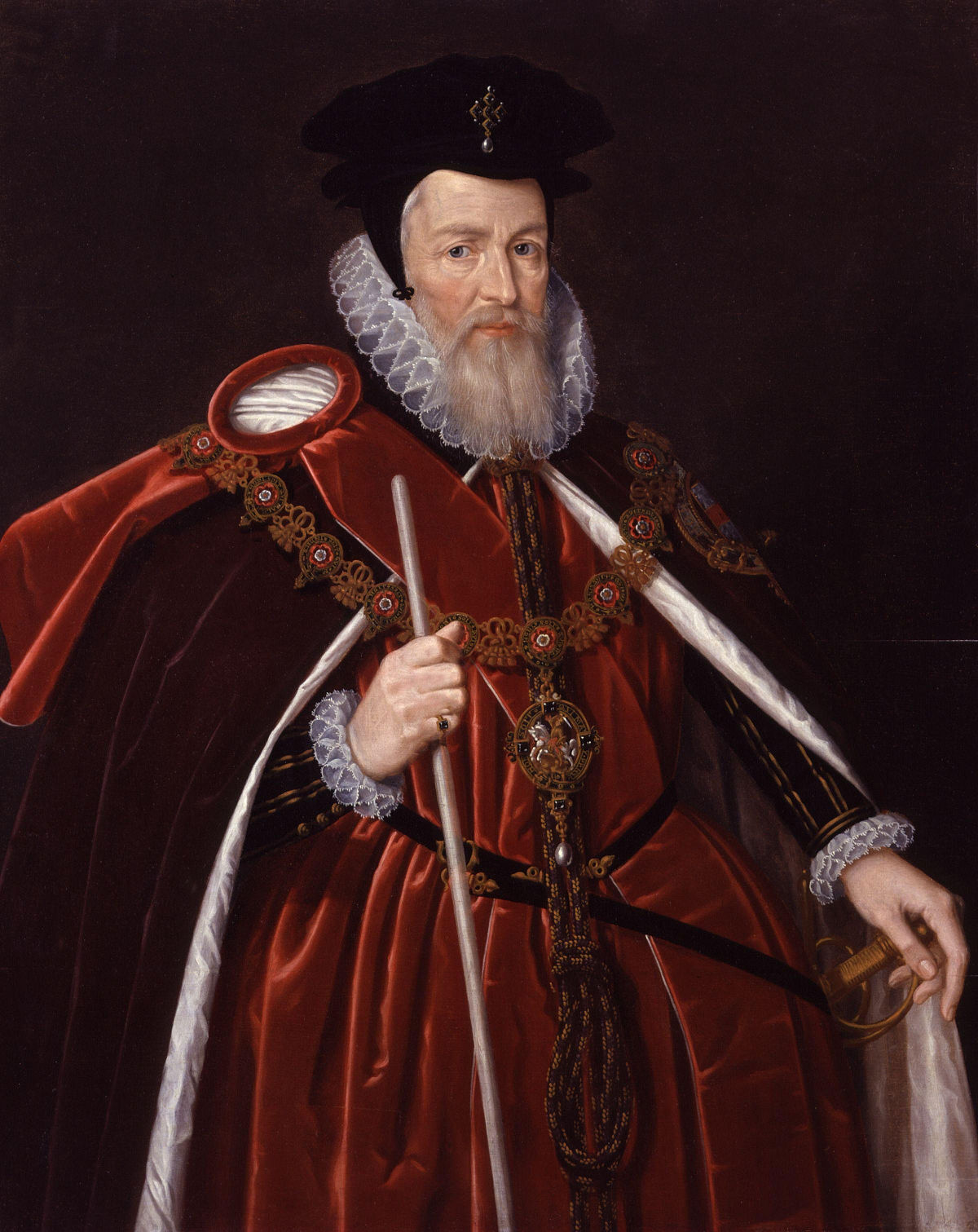
William Cecil 1st Baron Burghley, by Unknown artist, oil on panel, after 1587. On display at the National Portrait Gallery.

Richard Griffin, 2nd Baron Braybrooke – engraving by Charles Turner published 1810